
Abstract
Oil seals, as one of the key components of sealing systems in rotating equipment, play a critical role in maintaining lubrication stability, preventing contaminant ingress, and improving the reliability of industrial equipment. However, in many industrial applications, the selection of this component is often based primarily on initial purchase cost, while its long-term effects on failure rate, internal wear, and maintenance costs receive less attention.
In this study, the effect of oil seal quality on the performance of industrial gearboxes was investigated through a comparative field study conducted over a one-year period. The study was carried out on the polyethylene extrusion lines at Behin Ab Kerman Polymer Plant, where two similar Parallel Shaft gearboxes operating under identical working conditions, with the same drive system and identical lubricant, were monitored. The control group utilized a conventional TTO oil seal made of NBR, while the test group was equipped with a high-quality SKF HMSA10 RG oil seal compliant with DIN 3760 and fitted with a Dust Lip.
The results demonstrated that the leakage initiation time of the SKF oil seal was approximately 4.5 times longer than that of the conventional sample, while its leakage behavior also remained more stable. In contrast, the conventional oil seal exhibited a progressive increase in leakage rate, environmental contamination, reduction in the service life of adjacent components, and the occurrence of secondary failures. Analysis of the oil PQ Index indicated that the rate of increase in ferromagnetic particles in the gearbox equipped with the conventional oil seal was significantly higher, indicating greater internal wear severity, whereas the PQ trend in the SKF group remained gradual and nearly linear.
Monitoring of gearbox temperatures revealed no significant difference between the two groups, indicating that temperature alone is not a sufficiently sensitive indicator for detecting failures caused by sealing system deficiencies. The economic analysis of the study further showed that despite an initial price difference of approximately USD 10.5 between the two oil seals, the direct gearbox repair costs in the group equipped with the higher-quality oil seal were substantially reduced. The findings of this research demonstrate that sealing system quality can significantly influence not only leakage control, but also internal wear rate, equipment reliability, secondary failures, safety risks, and the life cycle cost of industrial equipment.
Introduction
In process and manufacturing industries, the reliability of rotating equipment is considered one of the primary factors in sustaining production stability, reducing unplanned shutdowns, and controlling maintenance and repair costs. Many costly and progressive failures originate not from major components such as gears or bearings, but rather from seemingly simple and low-cost components responsible for protecting the operating conditions of the system. Oil seals are among these components, and their role in lubricant retention, contaminant exclusion, and maintenance of stable operating conditions has a direct impact on the long-term health of equipment.
In practice, the selection of oil seals in many industrial facilities is predominantly based on initial purchase price. The relatively small price difference among available products often drives decision-making toward lower-cost alternatives, while the actual cost of using low-quality components typically becomes evident during the operational period. These costs frequently manifest as increased secondary failures, accelerated internal wear, workplace contamination, increased maintenance frequency, and reduced system reliability.
In industrial gearboxes, deficiencies in the sealing system can lead to gradual oil leakage, ingress of environmental contaminants, reduced lubricant film stability, and increased internal wear rate. Such failures are generally progressive in nature and, during the early stages, may not be clearly detectable through conventional condition monitoring indicators such as operating temperature. At the same time, continued oil leakage can result in significant secondary consequences, including environmental contamination, reduced service life of adjacent components, and increased safety risks.
Although numerous studies have focused on the importance of lubrication and condition monitoring of gearboxes, the role of sealing system quality in the development of chain failures and its impact on equipment life cycle cost has been less frequently investigated through field-based studies using real industrial data. Accordingly, this research was conducted with the objective of evaluating the effect of oil seal quality on the reliability of industrial gearboxes through a one-year field study under actual operating conditions.
In this study, in addition to evaluating leakage initiation time and seal degradation behavior, indicators related to internal wear, secondary failures, safety implications, and maintenance costs were also analyzed. In order to minimize the impact of economic fluctuations and maintain result comparability, all economic analyses presented in this research are based on United States Dollar (USD). The primary objective of this study is to provide field evidence demonstrating that oil seal selection is not merely a component procurement decision, but rather part of a broader strategy for improving reliability, reducing life cycle cost, and enhancing maintenance system performance.
Importance of Sealing Systems in the Reliability of Rotating Equipment
In industrial rotating equipment, reliability is not limited solely to the quality of the main components; the proper performance of protective and control components also plays a decisive role in maintaining system operational stability. Sealing systems are among the most critical of these components, with the primary function of maintaining lubrication balance and preventing contaminant ingress into the equipment. Any disruption in sealing performance can create the conditions for progressive and, in some cases, latent failures in rotating equipment.
Oil seals, as the most commonly used type of seal in gearboxes, simultaneously perform the functions of preventing lubricant leakage and blocking the ingress of environmental contaminants. Even minor and seemingly insignificant leakage can gradually lead to reduced oil level, lubricant film instability, and increased metal-to-metal contact among internal components. The ingress of dust particles and contaminants through deficient sealing systems also increases abrasive particle concentration in the lubricant and accelerates internal wear.
One of the key characteristics of failures associated with sealing systems is their progressive nature. Unlike sudden failures, sealing deficiencies generally begin without noticeable changes in parameters such as equipment operating temperature. The field data obtained in this study also demonstrated that despite a significant difference in leakage condition and internal wear, the average operating temperature of the two gearboxes remained nearly identical.
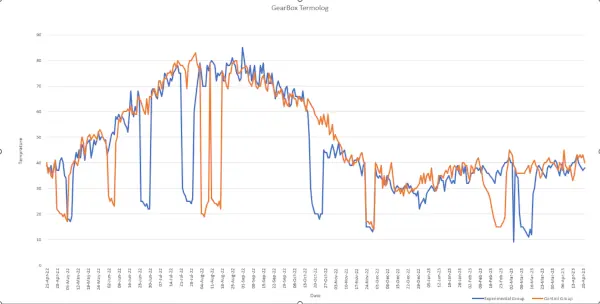
(Comparative diagram of gearbox temperature variations in the control group and test group)
As shown in Figure 1, the temperature variation patterns of the two gearboxes throughout the operating period were highly similar, with no significant difference observed between them. This finding indicates that temperature monitoring alone is not an adequate indicator for identifying failures caused by sealing system deficiencies, and that complementary indicators such as oil analysis and leakage rate should also be considered.
From a reliability engineering perspective, sealing system deficiencies can lead not only to increased internal wear, but also to secondary failures in adjacent components and even elevated safety risks. In the present study, oil leakage in the gearbox equipped with the conventional oil seal resulted in environmental contamination, reduced belt service life, and the recording of a safety incident. This finding demonstrates that the effects of seal failure extend beyond purely mechanical issues and also impact safety and operational aspects.
Failure Mechanisms Caused by Low-Quality Oil Seals
In many cases, oil seal failure is regarded as a minor defect, whereas in practice it can represent the starting point of a destructive chain reaction throughout the entire system. Low-quality oil seals are typically unable to maintain uniform and stable contact with the shaft over time due to deficiencies in design, material quality, dimensional accuracy, or performance stability.
Under continuous operating conditions, the sealing lip is subjected to thermal stresses, friction, and dynamic wear. In the event of elastomer degradation or reduction in spring stability, the radial force applied to the shaft decreases, creating microscopic leakage paths for oil passage. These leakages usually begin progressively and intensify as wear increases.
Insufficient prevention of environmental contaminant ingress is another major factor contributing to failure escalation. The absence or improper performance of the Dust Lip can lead to the ingress of abrasive particles into the contact zone, thereby increasing wear on both the shaft and the seal. In addition to damaging the seal itself, these particles enter the lubricant and increase the internal wear rate of the gearbox.
Progressive oil leakage reduces lubrication stability and decreases oil film thickness in contact regions. During the initial stages, this process generally appears only as a gradual increase in wear particles; however, it can subsequently lead to more severe failures and increased maintenance costs. The field data from this study showed that, in the conventional oil seal, leakage increased progressively after initiation and did not stabilize.
Beyond the internal effects, seal failure can also generate significant environmental and safety consequences. Workplace contamination, reduced service life of adjacent components, and increased incident risk are among these consequences. These findings demonstrate that oil seal failure is not an isolated phenomenon, but rather a potential initiator of chain failures affecting the entire system.
Research Methodology and Field Study Design
This research was conducted as a comparative field study at the Behin Ab Kerman Polyethylene Pipe Manufacturing Plant over a one-year period. The primary objective of the study was to evaluate the effect of oil seal quality on the performance, failure rate, internal wear condition, and life cycle cost of industrial gearboxes under actual operating conditions.
For this purpose, two completely identical Parallel Shaft gearboxes with a reduction ratio of 22:1 were selected. Both gearboxes were equipped with three gears and driven by 22 kW electric motors fitted with soft starters and variable speed control systems. Operating conditions, load level, operating cycle, environmental conditions, and lubricant type were maintained identical for both units in order to minimize the influence of other variables.
Both gearboxes were lubricated using Behran Bardbar 100 industrial oil. The only difference was the type of oil seal used. The control group was equipped with a conventional TTO oil seal with an approximate cost of USD 13.5, while the test group utilized an SKF HMSA10 RG oil seal compliant with DIN 3760 and equipped with a Dust Lip, with a cost of USD 24.
Throughout the study period, parameters including leakage initiation time, leakage rate, secondary failure condition, operating temperature, gearbox internal wear condition, and maintenance costs were recorded and analyzed. In addition, the oil PQ Index was periodically measured in order to evaluate the internal wear condition.
To eliminate the effect of economic fluctuations and enable better comparison of the data, all economic analyses were presented based on United States Dollar (USD).
Performance Results and Failure Analysis
The study results demonstrated that oil seal quality has a direct impact on gearbox operational behavior and system degradation trends. In the control group, where the conventional TTO oil seal was used, the first oil leakage was observed after 43 days during the first cycle and after 51 days during the second cycle. In contrast, in the gearbox equipped with the SKF oil seal, the leakage initiation time increased to approximately 194 days, indicating nearly a 4.5-fold increase in the operational life of the sealing system.
In addition to the difference in failure initiation time, the leakage behavior in the two groups also exhibited significant differences. In the control group, leakage increased progressively after initiation, and the leakage rate rose from approximately 1 liter per month to nearly 3 liters per month. This trend indicates instability in seal performance and the gradual intensification of contact surface degradation. In contrast, in the test group, the leakage rate remained at approximately 1 liter per month, demonstrating more stable and controllable behavior.
Field observations also showed that sealing system failure in the control group was not limited solely to oil leakage, but also generated multiple secondary consequences. Continuous contamination around the gearbox resulted in reduced pulley belt service life and increased demand for auxiliary maintenance activities. Furthermore, due to oil accumulation in the working area, one personnel slip incident was recorded, highlighting the safety consequences associated with sealing system deficiencies. In contrast, no secondary failures or leakage-related incidents were reported in the group equipped with the SKF oil seal.
Monitoring of the operating temperatures of the two gearboxes showed no significant difference in their thermal conditions. The average operating temperature during the hot season was approximately 58°C for the control group and approximately 59°C for the test group. During the cold season, the average temperatures were approximately 42°C and 39°C, respectively. These results indicate that failures caused by sealing system deficiencies are not necessarily accompanied by a noticeable increase in operating temperature, and that temperature monitoring alone cannot be considered a reliable indicator for detecting this type of failure.
Analysis of PQ Index and Internal Wear Condition
In order to evaluate the extent of internal gearbox wear, the trend of oil PQ Index variations throughout the study period was investigated. The PQ Index (Particle Quantifier) represents the concentration of ferromagnetic particles generated by internal wear within the lubricant and is considered one of the key indicators in condition monitoring of rotating equipment. An increase in this index generally indicates intensified wear of gears, bearings, and other internal metallic surfaces.
The measurement results showed that the PQ increase trend in the gearbox equipped with the conventional oil seal was accelerated. In this group, the PQ value increased from approximately 24 in the fourth month to approximately 48 in the sixth month, indicating rapid growth of wear particles and intensified internal wear. This behavior is consistent with the increasing leakage trend and the gradual ingress of contaminants into the system.
In contrast, in the gearbox equipped with the SKF oil seal, the PQ variation trend was significantly slower and nearly linear. In this group, the PQ value increased from approximately 20 to 37 during the one-year period, indicating better control of lubrication conditions and reduced internal wear rate. In the control group, due to the PQ Index exceeding 48 in the sixth month, the gearbox oil was completely replaced. In addition, the oil seals were also replaced during this maintenance activity. In the test group, the lubricant was only topped up throughout the study period, and the oil seals were not replaced.
These results demonstrate that sealing system quality is not only effective in leakage control, but also plays a direct role in maintaining lubrication stability and reducing the generation rate of abrasive particles. Furthermore, it was determined that oil analysis and PQ Index monitoring can be significantly more effective than temperature monitoring for the early detection of failures caused by sealing deficiencies. The use of high-quality oil seals also resulted in a noticeable change in MTBF (Mean Time Between Failures) as well as MTTR (Mean Time To Repair).
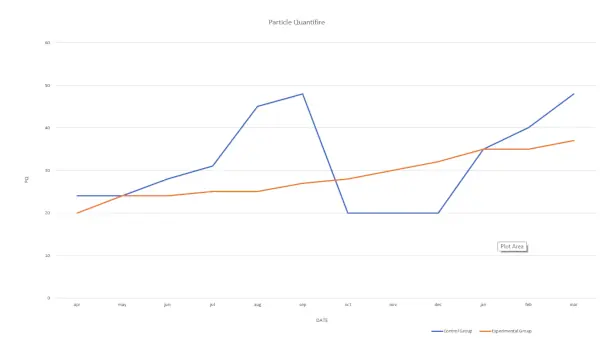
(Comparative chart of PQ Index variation trends in the control group and test group gearboxes during the one-year period)
Analysis of Oil Volume in the Gearbox
In order to evaluate lubrication stability and its relationship with sealing system performance, the variation in gearbox oil volume during the study period was monitored. The recorded oil volume trends in the two gearboxes revealed very clear differences between the behavior of the two oil seals.
It should be noted that, since the gearbox sight glass at the site did not include a specific graduation for values above 15,000 milliliters, the maximum oil level in the fully filled condition was recorded as 15,000 mL, although the actual value may have been up to 25 cc higher.
In addition, both gearboxes exhibited oil level reduction higher than standard acceptable limits. This condition was considered an inherent design issue of the equipment—which should subsequently be reviewed and, if necessary, corrective modifications should be implemented within the system to resolve the issue. However, the present study focuses solely on the comparative performance evaluation of the two oil seals. It should also be noted that the chronic oil loss problem in these gearboxes was the primary reason for initiating this study.
In the control group gearbox, the oil volume exhibited severe fluctuations, repeated drops, and sudden reductions. These abrupt decreases in oil level, reaching very low ranges (approximately 12,000 milliliters), indicate that leakage in this gearbox was not only continuous but also progressive. This behavior reflects a serious weakness in the sealing system and its inability to maintain oil volume stability. The severe oil level fluctuations also confirm that oil replenishment in this group occurred frequently and outside scheduled maintenance intervals. Repeated and significant oil level reductions, in practice, lead to lubricant film instability, reduced hydrodynamic lubrication, and increased probability of metal-to-metal contact and internal wear.
In contrast, in the test group gearbox equipped with the SKF HMSA10 RG oil seal, the oil volume behavior was considerably more stable. Oil level reductions were smaller, more gradual, and more limited, and the oil level remained within the safe operating range during most of the operational period. This behavior indicates that the higher-quality sealing system was able to control oil leakage, maintain lubrication stability, and reduce dependence on oil replenishment.
These data are consistent with the findings presented in the PQ analysis section, since repeated oil level reduction results in increased wear and consequently increased ferromagnetic particle generation. Furthermore, the oil volume trend confirms that even with similar operating temperatures in the two units, lubrication condition and leakage behavior can differ fundamentally—differences that can only be identified through oil analysis and oil level monitoring.
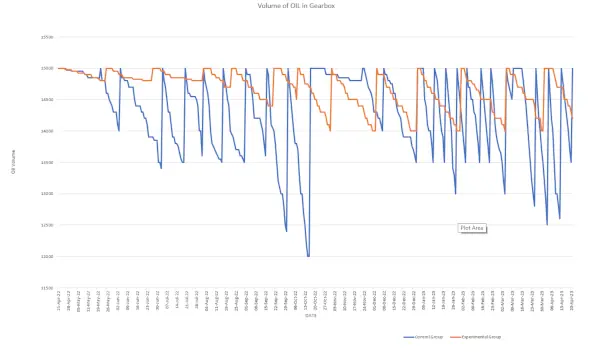
(Oil volume variation chart in the control group and test group gearboxes)
Economic Analysis and Life Cycle Cost
One of the primary objectives of this study was to evaluate the effect of oil seal quality on the life cycle cost of gearboxes. Although the initial price difference between the two oil seals used in this study was only approximately USD 10.5, the results demonstrated that this limited difference in procurement cost had a significant impact on operating and maintenance expenses.
Evaluation of direct maintenance costs showed that the total annual costs associated with the gearbox equipped with the SKF oil seal were approximately USD 710, whereas this figure reached approximately USD 1180 for the gearbox equipped with the conventional oil seal. This difference was mainly attributed to increased maintenance frequency, replacement of adjacent components, cleanup of oil contamination, and management of secondary failures.
In addition, the total annual production line cost, including other unrelated mechanical and electrical failures, was estimated at approximately USD 2530 for the SKF group and approximately USD 2400 for the control group. For example, one PLC module was replaced in the test group production line during the study period. Although the overall difference in total line cost appears relatively limited, it should be noted that the only modification implemented in this study was the selection of the oil seal type.
The economic findings of this research indicate that decision-making based solely on the initial component purchase price does not necessarily result in lower actual costs. In contrast, selecting higher-quality components can significantly reduce equipment life cycle cost through improved reliability, reduction of secondary failures, minimization of downtime, and control of internal wear.
Parameters for Proper Oil Seal Selection
Proper oil seal selection in industrial equipment should be based on actual operating conditions and reliability requirements. One of the most important factors is the equipment operating condition, including rotational speed, operating temperature, internal pressure, and lubricant type. Each of these parameters can directly influence the appropriate seal design and material selection.
The elastomer material used in the oil seal is also of critical importance. NBR, FKM, and PTFE compounds each possess different temperature ranges, chemical resistance characteristics, and wear behavior. Incorrect selection of seal material can result in rapid reduction of operational service life and increased probability of leakage.
Other important factors include manufacturing quality, dimensional accuracy, spring quality, and the presence of a Dust Lip. The use of a Dust Lip in contaminated environments can play an effective role in preventing abrasive particle ingress and increasing seal service life. In addition, compliance with standards such as DIN 3760 can substantially ensure sealing performance quality and operational stability.
Shaft surface condition, machining quality, clearance level, and installation method are also determining factors in proper sealing system performance. Even high-quality oil seals will not provide satisfactory performance if improperly installed or used on damaged surfaces.
Ultimately, oil seal selection should be based on a Life Cycle Cost (LCC) approach. In critical equipment with high downtime costs, the use of higher-quality components can be fully justifiable from both economic and reliability perspectives.
Conclusion
The results of this field study demonstrated that oil seal quality has a direct impact on the reliability, internal wear rate, and life cycle cost of industrial gearboxes. The use of the SKF oil seal resulted in a significant increase in the operational life of the sealing system, with leakage initiation time recorded at approximately 4.5 times longer than that of the conventional seal. In addition, leakage behavior in this group was more stable, preventing the progressive escalation of failure.
PQ Index analysis demonstrated that sealing system deficiencies can increase the generation rate of wear particles and intensify internal wear. In contrast, the more stable performance of the higher-quality oil seal provided better control of lubrication conditions and reduced the progression of internal wear.
It was also determined that operating temperature alone is not an appropriate indicator for detecting this type of failure, and that oil analysis and wear-related indicators can provide more accurate information regarding the actual condition of the equipment.
From an economic perspective, the relatively small difference in initial oil seal procurement cost resulted in a significant reduction in maintenance expenses and secondary failures. This finding demonstrates that selecting components solely on the basis of initial purchase price can lead to increased operating costs over the long term.
Overall, the use of a higher-quality oil seal resulted in increased MTBF (Mean Time Between Failures), reduced MTTR (Mean Time To Repair), reduced secondary failures, improved safety conditions, and lower equipment life cycle cost. The findings of this research emphasize that sealing system selection should be considered an integral part of reliability strategy and physical asset management in industrial applications.